
Your Website Isn't Just for Google Anymore: Designing for the Age of AI Search
Search is changing faster than most small business owners can keep up with, and it's not just about keywords anymore. In 2026, AI-powered search tools like Google's AI Overviews and answer engines are reading your website, pulling out the clearest, best-structured answer, and serving it directly to the user — often without a single click to your site. That shift means the way your website is designed and organized has become just as important to your visibility as your content itself.
From Search Results to Straight Answers
For two decades, SEO meant competing for a spot in a list of blue links. That world is fading. Search engines now increasingly favor giving people a direct answer, drawn from what marketers are calling Answer Engine Optimization, or AEO. Instead of ranking pages primarily by keyword density and backlinks, AI systems extract information from clear, well-organized content and decide whether it's trustworthy enough to summarize and recommend.
This is a meaningful change in how people search. Users are typing full, conversational questions — "who's a good branding agency for a small business near me" — rather than clipped keyword phrases. AI tools are built to answer that kind of question directly, which means your site needs to be written and structured in a way that a machine can actually parse and trust, not just a way that reads well to a human skimming for keywords.
Design Decisions Are Now SEO Decisions
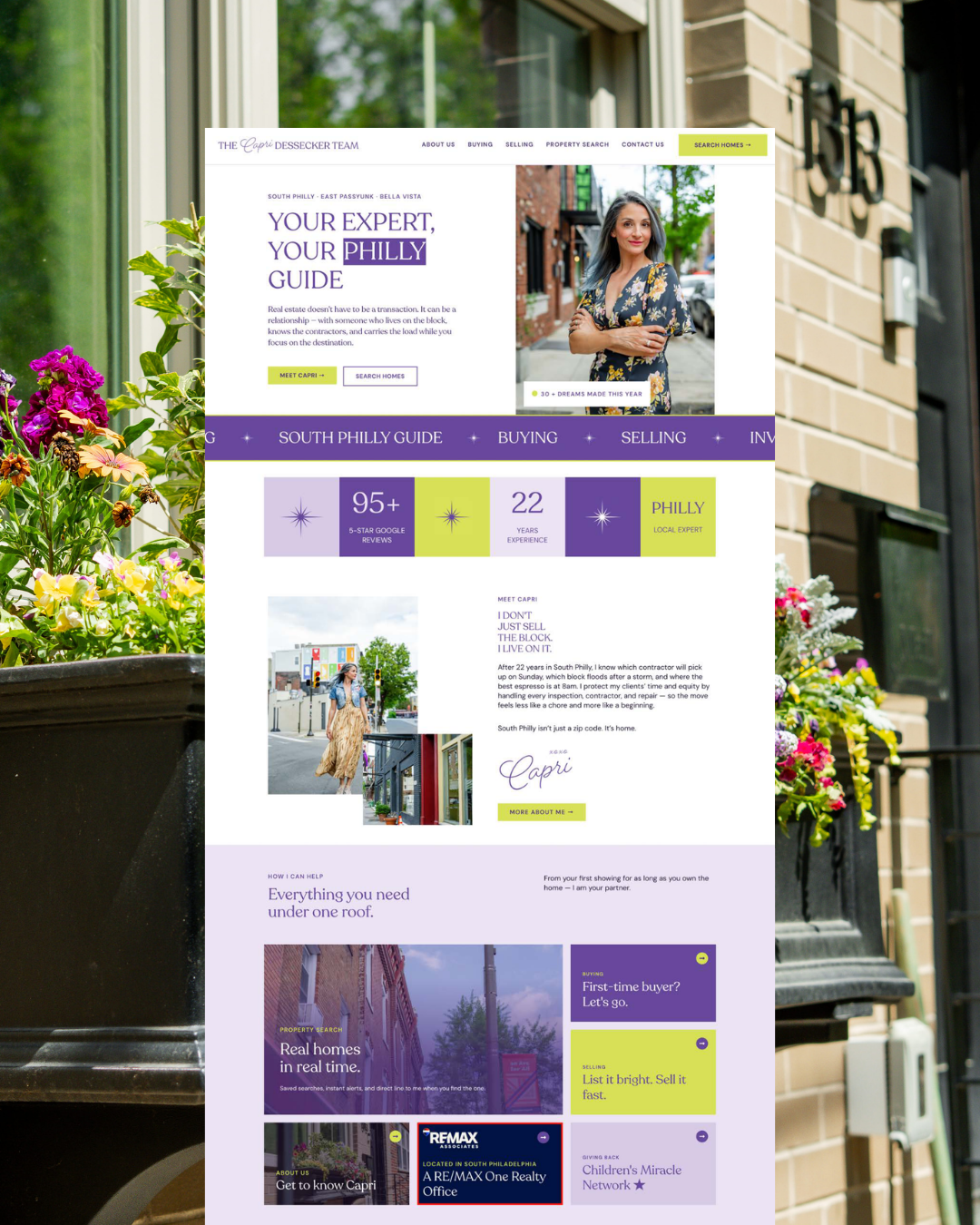
Here's where this becomes a design conversation rather than a purely technical one. AI search tools rely heavily on visual and structural hierarchy to understand a page: clean heading structures, short paragraphs, clear service descriptions, and logical navigation all help a machine figure out what you do and who you do it for. A beautiful site that's visually confusing, buries its message in clever copy, or scatters information across a dozen loosely related pages is much harder for AI to summarize accurately — which means it's less likely to get recommended at all.
In practice, this rewards a lot of the same principles good designers have always pushed for: clarity over cleverness, a strong visual hierarchy, and messaging that says plainly what you offer and who it's for. The difference is that this is no longer just a best practice for human visitors — it's now directly tied to whether your business shows up when someone (or something) is searching for you.
Practical Takeaways
A few concrete moves make a real difference here:
• Use real, descriptive headings (H1, H2, H3) instead of vague or stylized labels, so both readers and AI tools can follow your page's logic.
• Write short, direct answers to common customer questions near the top of relevant pages, before diving into detail.
• Keep your business name, address, and contact details identical across your website, Google Business Profile, and social platforms — inconsistency undermines AI's trust in your business.
• Avoid generic, templated service pages; specific, detailed pages about what you do and who you serve perform better with both humans and AI.
• Make sure your site's structure (navigation, page hierarchy) reflects how a customer would naturally think about your business, not how your internal team is organized.
Don't Abandon the Fundamentals
None of this means traditional SEO or strong visual branding suddenly stopped mattering — quite the opposite. Site speed, mobile performance, and consistent brand identity are still the foundation everything else is built on. What's changed is that a scattered, jargon-heavy, or visually cluttered site now has two audiences to lose: the human visitor and the AI system trying to decide whether to recommend you. Getting both design and structure right is no longer optional polish; it's core strategy.
For small business owners, the takeaway isn't to panic and overhaul everything overnight. It's to look at your website with fresh eyes: is it obvious, at a glance, what you do, who it's for, and why someone should trust you? If the answer is murky to a human visitor, it's almost certainly murky to an AI system too.
This is exactly the kind of intersection — where brand clarity, thoughtful design, and search visibility meet — that we spend our days thinking about at The Branding Den. If your website hasn't been looked at with this new search landscape in mind, it might be time for a fresh set of eyes.